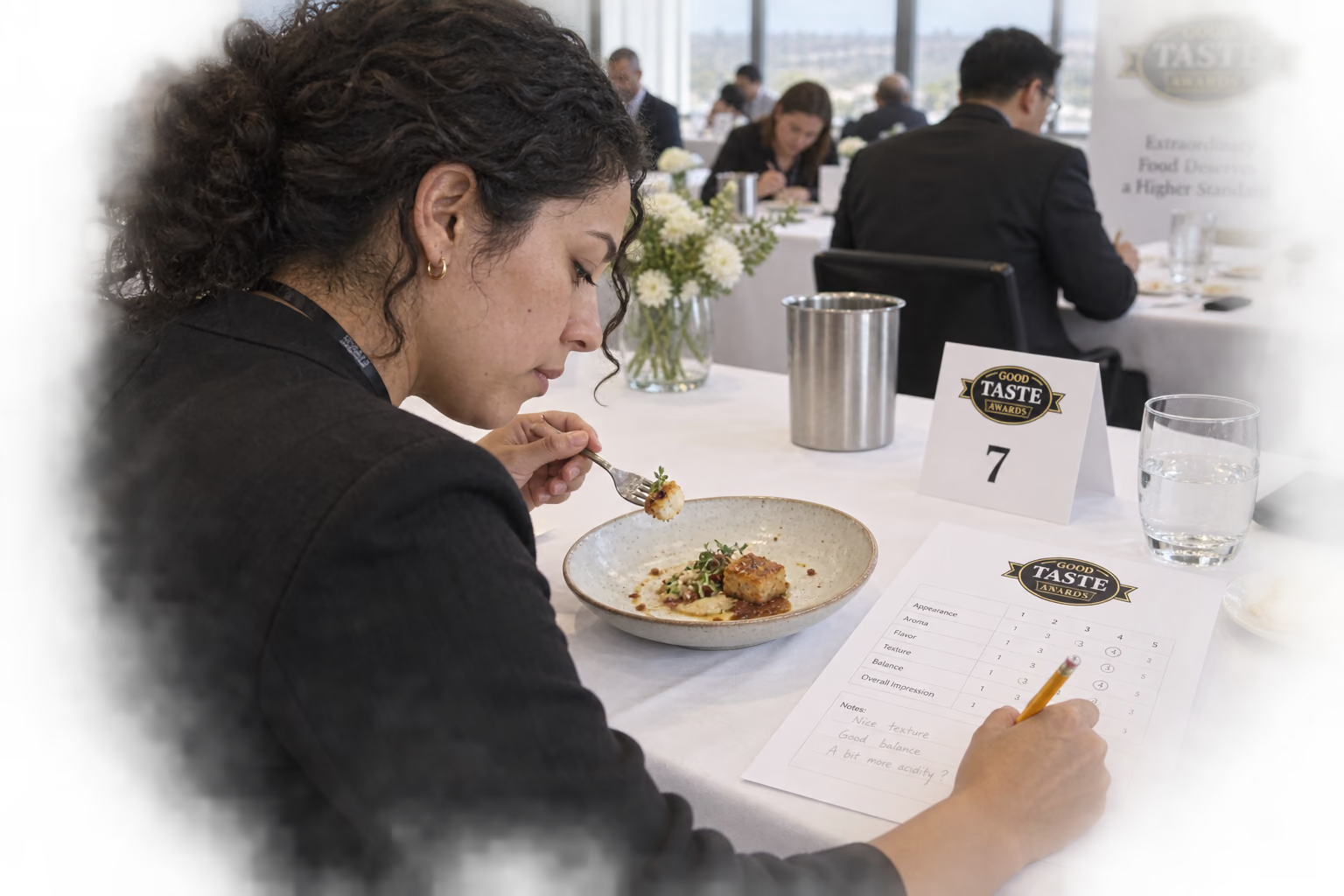
Before each Overall Liking response is locked, identity-bearing commercial information is withheld so the product's sensory experience can arrive first.
What assessors do not receive
Assessors do not receive the product's:
- brand or producer identity;
- identity-bearing retail packaging;
- price or market position;
- existing awards or reviews;
- sales performance or popularity;
- desired or expected result;
- individual entrant relationship;
- provisional panel outcome.
Entrants do not choose, brief or veto individual assessors.
Anonymous coding protects identity through service
The entry identity and blind code are kept in separate controlled records. People preparing or serving the sample use the information required for their task; assessors see the anonymous presentation.
The code itself should not reveal producer, brand, star expectation, category prestige, service sequence or result. Repeated exposure is monitored so that a person cannot infer the identity through an avoidable pattern.
Chain of custody begins before the tasting room
Blind presentation is only meaningful if the sample can be traced back to the accepted entry. Receipt, quantity, batch, condition, storage, preparation transfer and service are recorded through the chain of custody.
If identity is uncertain, a seal is materially compromised, or an unexplained substitution appears, the issue is resolved before release to assessment. The original record is not silently overwritten.
Order can change what comes next
A delicate infusion tasted after an intense chilli sauce is not in the same sensory position as the same infusion tasted first. Fat, sweetness, acid, bitterness, smoke, alcohol, astringency and aromatic persistence can carry over.
Products are therefore randomized within a valid session plan. When the number of products is too large for one shared block, a balanced design distributes products and positions so the same item is not systematically advantaged or burdened.
Category method profiles also inform sequence, portion and recovery. Strong products do not merely receive more water; they may need a longer interval, a neutral recovery item or a different block.
Independence comes before discussion
Every eligible assessor records an Overall Liking response before learning what anyone else thought. The response is then locked.
This protects against:
- status pressure from a professional or Panel Lead;
- early comments shaping later perception;
- a confident voice becoming the group answer;
- score bargaining;
- response changes made to avoid disagreement.
Legitimate disagreement is evidence, not misconduct.
Discussion has a different purpose
After the lock, discussion can improve the explanation. One person may notice that fruit aroma disappeared in the finish; another may describe an uneven texture across the portion. The Panel Lead helps the group test whether the language is clear and supported.
Discussion cannot reopen the primary responses, reveal an entrant's desired outcome or force a consensus score. Professional confirmation, where required, is recorded separately and remains bounded by the calculated candidate.
Presentation is controlled, not beautified
Samples are served in an inert and consistent manner suited to the product. Portion and state should represent ordinary consumption. Decorative garnishes, branded service items and prestige plating are excluded unless a component is an inseparable part of the defined product and assigned method.
The aim is not to make the product look plain for its own sake. It is to remove avoidable cues while preserving the sensory experience the consumer is meant to receive.
When blind assessment is not feasible
Some products may be identifiable by an intrinsic shape, colour, aroma or form. That does not automatically invalidate blind assessment; blind control concerns information and presentation that can reasonably be withheld.
If the product cannot be presented without exposing a material identity or claim in a way that prevents the method from operating, eligibility or method review occurs before panel assignment. The tasting room does not improvise a claim after exposure.
Blind does not mean perfect objectivity
Human perception remains human. Good Taste Awards does not claim to remove preference, memory, culture or every source of variation.
Blind coding, independent locking, order control and predefined methods remove avoidable influence and make the evidence more disciplined. The honest claim is a controlled and traceable process, not a mind without context.
See Overall Liking · Read the Core Method